 Image Credit: Getty Images / Stringer / Getty Images
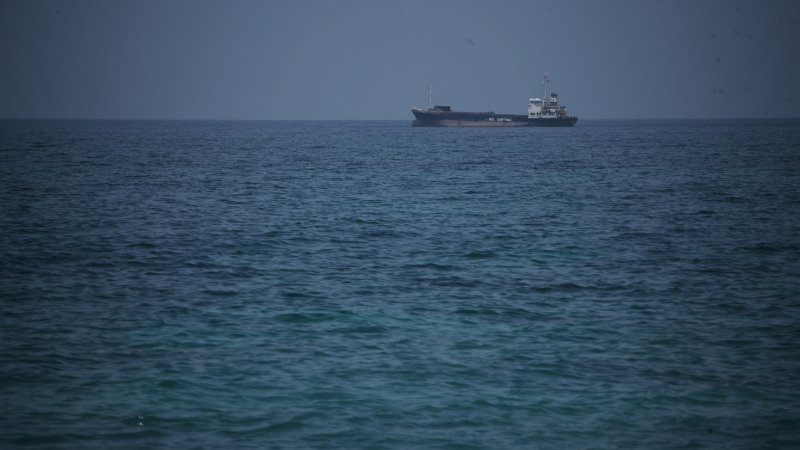
The US Navy blockade of Iran’s ports on the Strait of Hormuz is “going global,” Secretary of War Pete Hegseth said on Friday.
“Our blockade is growing and going global,” Hegseth told reporters.
“No one sails from the Strait of Hormuz to anywhere in the world without the permission of the United States Navy.”
The blockade began almost two weeks ago, on 13 April.
Hegseth added that the US is not “anxious” to make a deal with Iran, because the US has “all the time in the world” and is prepared to wait until Iran agrees to give up its ambitions to acquire nuclear weapons.
“Iran knows that they still have an open window to choose wisely… at the negotiating table. All they have to do is abandon a nuclear weapon in meaningful and verifiable ways.”
According to US General Dan Caine, who joined Secretary Hegseth in addressing reporters, 34 ships had been forced to turn back by Friday morning.
Caine said the US Navy would continue to interdict Iranian vessels in the Pacific Ocean.
“We’re closely tracking vessels of interest headed towards Iran and those moving away from Iran that were outside the blockade area when this blockade was ordered and… we’re prepared and postured to intercept them.”
Hegseth also warned that any attempt to lay mines in the Strait of Hormuz would be classed as a violation of the ongoing ceasefire.
“Transit (of the Strait of Hormuz) is occurring, much more limited than anybody would like to see and with more risk than people would like to see, but that’s because Iran is doing irresponsible things with small, fast boats… with weapons on them,” he said.
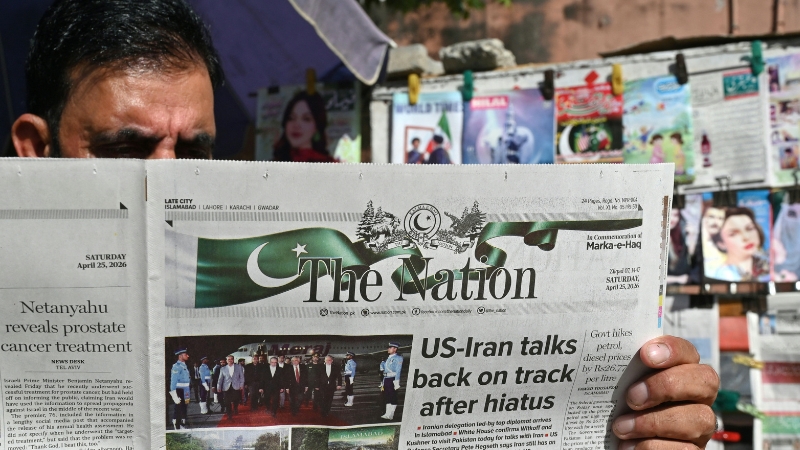
US negotiators are due to travel to Pakistan today in a bid to continue talks to end the war, but Iran has said it has no plans to take part directly.
Special envoy Steve Witkoff and President Trump’s son-in-law Jared Kushner will represent the US. It’s reported that Vice President JD Vance is also ready to travel to Pakistan.
Iran’s Foreign Secretary Abbas Aragchi is already in Islamabad, but a foreign ministry spokesperson said Iranian officials will not meet with US representatives. Instead, discussions will be mediated through Pakistani officials.
On Friday, President Trump told Reuters that Iran is planning to make an offer that will satisfy his demands.
President Trump declined to say who the US is negotiating with, “but we’re dealing with the people in charge now.”
On Tuesday, President Trump extended his two-week ceasefire to allow time for more negotiation.
Oil prices have surged as the US Navy continues to blockade the Strait of Hormuz. Just five ships transited the crucial waterway this week, compared to 130 a week before the conflict began at the end of February.
Israel and Lebanon also extended their ceasefire this week, for another three weeks, at a meeting brokered by President Trump in Washington. Fighting appears, however, to be continuing in southern Lebanon.
Iran has made a ceasefire in Lebanon a precondition for negotiations with the US.