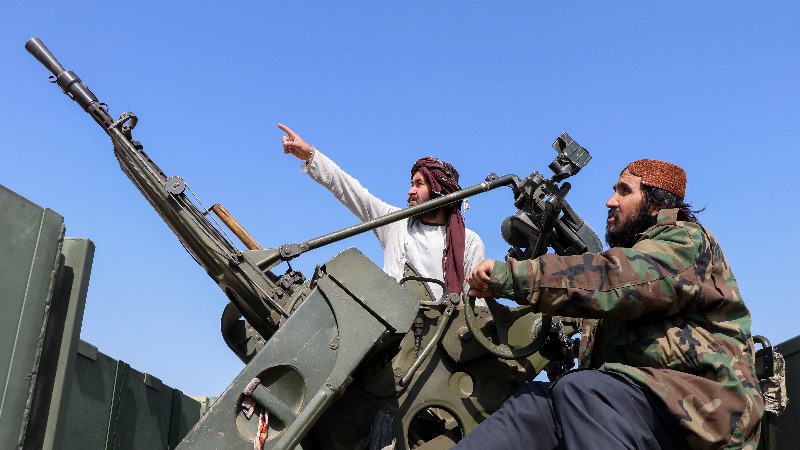
 Image Credit: - / Contributor / Getty
Pakistan and Afghanistan exchanged military strikes along their border Friday morning in a conflict that began to intensify in October.
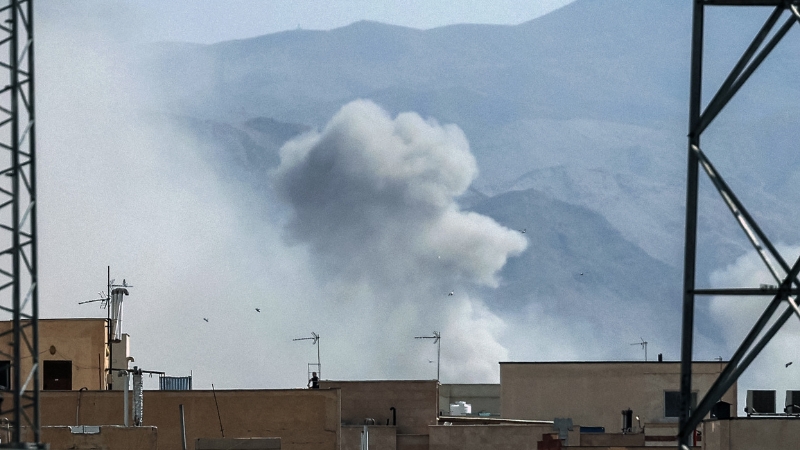
Blasts rocked the Afghani capital, Kabul, as well as several other regions as Islamabad launched Operation Ghazab Lil Haq (“Wrath of Justice”) following Afghanistan carrying out attacks on Pakistani military positions hours earlier which killed two Pakistani soldiers and wounded three others.
Mosharraf Zaidi, spokesman for the Pakistani Prime Minister Shehbaz Sharif, said that Islamabad killed dozens of Afghan fighters and destroyed several of their military posts and armored vehicles as part of a retaliatory response.
Afghanistan tells a different story, however.
Afghan authorities said their initial attack was retaliation for Pakistani air raids last week. The Afghan military announced it captured more than a dozen Pakistani army posts and inflicted heavy casualties across several border provinces.
Pakistani officials said Afghanistan’s attack was unprovoked, denied losing any positions and accused Afghanistan of targeting civilians.
Embed from Getty ImagesImage credit: TOPSHOT – Taliban security personnel stand guard near the Torkham border crossing between Afghanistan and Pakistan in the Nangarhar province on February 27, 2026. Pakistan bombed major cities in Afghanistan including the capital Kabul on February 27, with Islamabad’s defence minister declaring the neighbours at “open war” following months of tit-for-tat clashes. AFP journalists in Kabul and Kandahar heard blasts and jets overhead, as Pakistan launched air strikes on the Afghan capital and southern power base of the Taliban authorities. (Photo by Aimal Zahir / AFP via Getty Images)
The Taliban took to Western social media to announce their discontentment with their fellow Islamic neighbor.
“The cowardly Pakistani military has carried out airstrikes in certain areas of Kabul, Kandahar, and Paktia; fortunately, there have been no reported casualties,” Taliban government spokesman Zabihullah Mujahid said.
Image credit: Taliban security personnel keep watch near the Durand Line in Gurbuz district of Khost province on February 27, 2026 following overnight cross-border fighting between Pakistan and Afghanistan. Clashes near the key Torkham border crossing between Afghanistan and Pakistan resumed on February 27, AFP journalists said, as the neighbours engaged in deadly fighting. Violence overnight hit a camp for Afghans who had just crossed from Pakistan, with several people wounded. (Photo by AFP via Getty Images)
Numerous videos of Friday’s strikes were seen on social media:
Afghanistan has been ruled by the jihadi Taliban since President-via-autopen Joe Biden pulled U.S. forces out in a botched 2021 withdrawal.
Pakistan is a China-aligned nuclear power, operating not just nuclear reactors but possessing nuclear weapons as well.
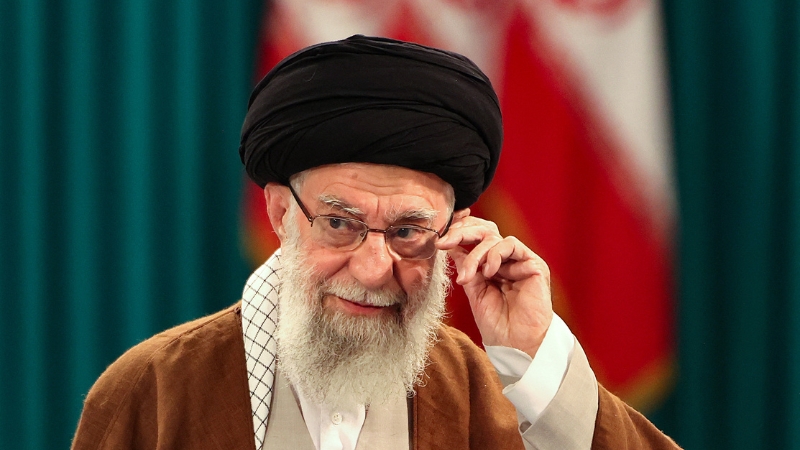
The atomic abilities of Pakistan are particularly notable as the U.S. is currently in negotiations with Iran in hopes of a new-Iran nuclear deal – a treaty which will curb Tehran’s nuclear abilities. While Iran has denied interest in nuclear weapons, it maintains its ambition for nuclear energy.
Embed from Getty ImagesImage credit: A Taliban security personnel keeps watch near the Durand Line in Gurbuz district of Khost province on February 27, 2026 following overnight cross-border fighting between Pakistan and Afghanistan. Clashes near the key Torkham border crossing between Afghanistan and Pakistan resumed on February 27, AFP journalists said, as the neighbours engaged in deadly fighting. Violence overnight hit a camp for Afghans who had just crossed from Pakistan, with several people wounded. (Photo by AFP via Getty Images)