 Image Credit: ILIA YEFIMOVICH / Contributor / Getty
(LifeSiteNews) — In a further sign of how the Iran war is remaking the world, Italian Prime Minister Giorgia Meloni announced on Tuesday she was suspending Italy’s 20-year-old defense agreement with Israel “in light of the current situation.”
The agreement, first launched in 2005 and automatically renewed every five years, was designed to promote trade deals between Italy and Israel, particularly in the defense sector.
Reports from Italian news agency Ansa and national newspaper Corriere della Seraconfirmed details of the move, which followed the Italian government’s summoning of the Israeli ambassador in Rome to explain how Italian United Nations Interim Force in Lebanon (UNIFIL) forces had been fired upon by Israel in Lebanon.
READ: Trump doubles down on Pope Leo criticism, attacks Italian PM Meloni over stance on Iran
Meloni’s suspension of cooperation with Israel was announced a day after the Israelis responded to remarks by the Italian Foreign Minister Antonio Tajani, who condemned Israel’s “unacceptable attacks” on civilians during the Israeli invasion of Lebanon.
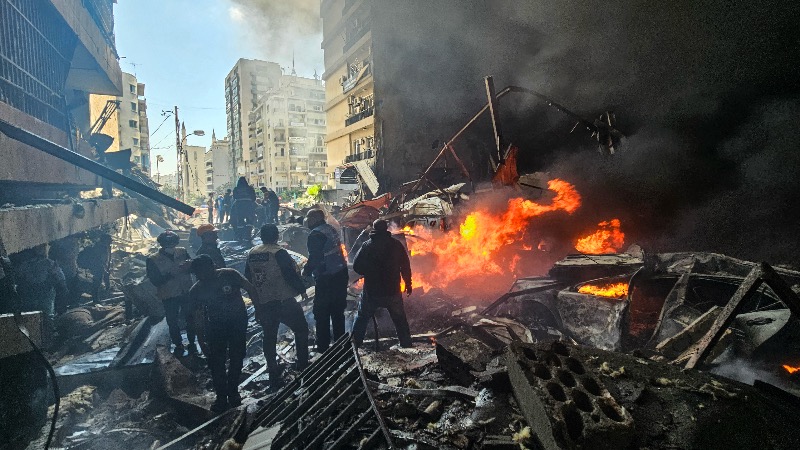
The Italian ambassador to Israel was summoned on Monday in protest at Italian condemnation of Israel’s assault, which has seen civilian housing and infrastructure heavily bombed in the capital Beirut and in the Crusader city of Tyre. Graphic video shows bodies flying through the air after one impact, during a ten-minute period in which Israel launched over 100 strikes on Lebanon.
Israel has repeatedly invaded Lebanon, with some counts saying this is its seventh invasion. Israel’s initial objective in this latest campaign scaled back from the intended occupation of all of Lebanon south of the Litani River, with the chief of the IDF declaring all of Southern Lebanon a “killzone” two weeks ago.
Houses, churches, graveyards and entire towns and villages have been leveled, with Israeli aircraft spraying glyphosphate biocides on agricultural land. Israelis have declared their intention to settle Southern Lebanon permanently. On March 24 Israeli minister Bezalel Smotrich said the Litani River would be the new northern border, a step towards realizing his stated vision of a “Greater Israel.”
Italy under Meloni had formerly been a reliable ally of Israel and had resisted, until now, growing public outrage at Italy’s continued support of a state which has killed over 70,000 in its Gaza campaign, recognized outside the Israeli sphere of influence as a genocide. A BBC report from April 14 notes that public opinion is likely a factor in Meloni’s decision, with popular resentment of Israel and its partner the United States further aggravated by President Trump’s attacks on Pope Leo XIV representing electoral pressure for the Fratelli d’Italia leader.
READ: Israel blocks Easter celebration as Christians ‘increasingly unwelcome in Jerusalem’: report
France, seen as the guarantor of Lebanese democracy, has seen calls from political leaders to intervene military to defend Lebanon from destruction. The French have been excluded at Israel’s demand from talks towards a Lebanese ceasefire, with the Israelis describing the French as “unhelpful.” France proposed its own strategy for peace in Lebanon, providing military and financial aid. This is seen by the Israelis as an unwelcome intrusion on their goal of regional dominance.
Trump responds
The crisis sparked by this war is reshaping global alignments.
In an interview with Fox News reported by Ansa on April 15, U.S. President Donald Trump announced that former ties with states who “refused their help” to Trump’s war would not continue.
“Whoever refused their help in managing the situation with Iran, we no longer have the same relationship with that country,” he said, before explaining, “Just so you know: Italy receives large quantities of oil from the Strait.”
Trump’s decisive revision of the relationship with Italy follows his March 3 statementthat the U.S. will “cut off all ties with Spain,” after the Spanish government announced on March 2 that it will not permit the U.S. to use its military bases to launch attacks on Iran.
European leaders have signaled they must pursue an independent defense architecture from America, as Trump’s outrage at European refusals to enter his war have also seen him threaten to withdraw the United States from NATO.
This geopolitical rift emerges alongside British and European efforts to resolve the Iranian crisis and resume trade outside of the U.S. framework.
Changing the regime
Italy’s decision marks a shift in the political position in Europe on Israel, permissioned in the main by its patronage and protection afforded by the United States. The British government has insisted it will not join the war on Iran, which the United States admitted on March 2 was launched due to pressure from the Israelis. Further, contrary to the American position, the conditions for peace must include a ceasefire in Lebanon, as the British, French, Italian, German, Canadian, Danish, Dutch, Spanish and EU leadership insist.
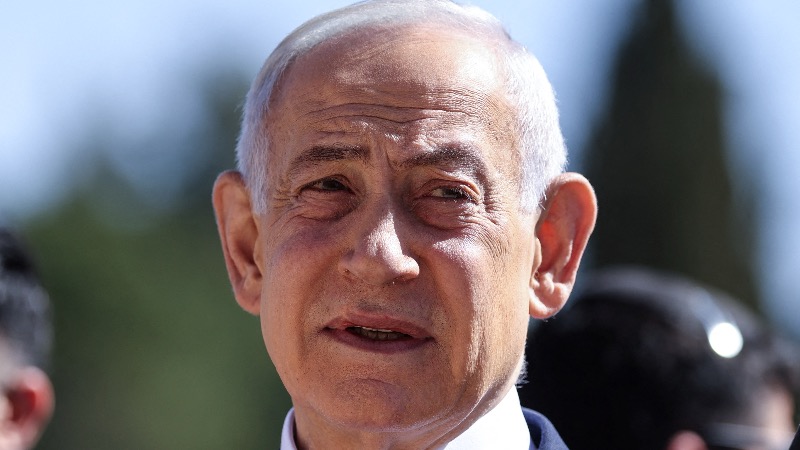
The White House first acknowledged then refused the inclusion of a Lebanon ceasefire as a condition for talks with the Iranians. The reason Lebanon was excluded after the fact by the Trump administration is reported to be the result of a phone call made by Israeli Prime Minister Benjamin Netanyahu.
Following communication to the U.S. of the 10-point ceasefire framework which stipulated a ceasefire in Lebanon as a precondition for talks, Netanyahu made a televised address in which he stated there would be no ceasefire in Lebanon. The White House Press Secretary added that Iran’s 10-point plan had been “thrown in the garbage.”
The move by Meloni marks a further fracturing of the Atlanticist relationship which saw Europe and the U.S. coordinate international diplomacy, trade and partnerships. It is a sign of how increasing tensions produced by the war on Iran are reshaping the world by force and policy and public opinion no longer confined by formerly effective political narratives.
The reason for this is the war presents an existential threat to global supply chains, whose effects already include actual and inevitable further shortages in food, fuel, medicine and fertilizer supplies.
This explains why a formerly forbidden consensus against Israel appears to be emerging. The war launched for Israeli interests by the United States has now produced a deadlock whose lack of resolution could undermine the global economy. It is this emergency, whose limits are not yet defined, formerly disparate political powers are uniting in a single message of condemnation of Israeli actions. Recognition is growing that if Israel is not restrained, the damage to the global economy and the dollar itselfmay be fatal.
A new consensus against Israel?
The socialist government of Spain, the post-fascist government of Italy, the neo-liberal globalists of Britain, France and Germany, and the Communist regime of China are aligned against the Israelis and accordingly against their sponsor, the United States.
The war has broken down old bonds of allegiance secured by a security architecture which has produced insecurity, instability, economic crisis and the routine commission of war crimes.
This includes the destruction by U.S. missiles of a school in Iran’s Minab – killing 168(mainly young girls) in a “double tap” strike by American Tomahawk missiles. With Iran’s military production and firepower mainly deep underground, U.S. and Israeli airstrikes have targeted many civilian sites, following the stated policy of the Israeli “Dahiya Doctrine” being applied to Iran and to Lebanon.
This doctrine, first developed in Israel’s 2008 invasion of Lebanon, orders the deliberate targeting of civilian infrastructure such as water, food, and fuel supplies, along with schools, hospitals, housing and transport routes. Its aim is to make civilian life impossible, producing social collapse and a refugee crisis towards “regime change.” This violence is permissioned by demonizing the enemy, a technique known as “hasbara,” and was adopted by Donald Trump exactly mirroring false atrocity claims made by the Israelis after October 7.
When asked on March 7 whether U.S. and Israeli strikes had deliberately targeted civilian water desalination plants in a dangerous escalation for a water-scarce Gulf, Trump replied the “Iranians are among the most horrible people ever,” before adding: “They cut babies’ heads off … cut women in half.”
READ: How Israel uses the ‘hasbara’ technique to deceive Americans into supporting their wars
So far, the Iranian regime seems impervious to change, despite the assassinations, the repeated rounds of destruction, and failed diplomatic efforts to rally a Western coalition to join the war.
The war has reshaped the words and now the actions of European leaders. The adoption of Israeli media propaganda and military strategy has transfigured the U.S. The regime this war has changed is not that in Iran. It is already changing our regime in the West, but into what?
This is the bottom line. It will be decided by whether restraint or escalation makes the headlines in the days to come.
JUST IN: Trump Secures 10-Day Ceasefire Between Israel & Lebanon!