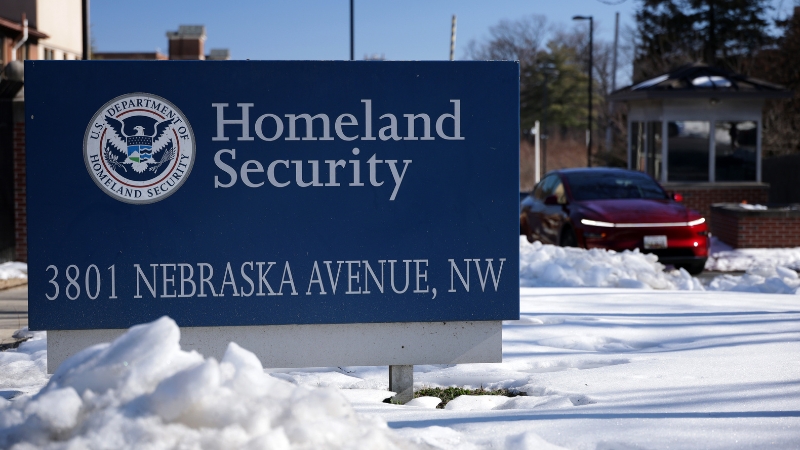
 Image Credit: Alex Wong / Staff / Getty Images
Funding for the Department of Homeland Security (DHS) ran out at midnight, beginning the third government shutdown of President Trump’s second term, as Democrats dig in on demands to reform immigration enforcement.
The Hill reports, “The shutdown is likely to last longer than the four-day partial shutdown that ended last week, as the White House, Republicans and Senate Democrats negotiate on proposed immigration reforms.
“Most House and Senate lawmakers have departed Washington for a scheduled weeklong recess. Senate Majority Leader John Thune (R-S.D.) said he would call lawmakers back to Washington in the event that negotiators come to an agreement but did not cancel the break entirely.
“Democrats rejected the White House’s latest offer on Thursday, with Senate Minority Leader Chuck Schumer (D-N.Y.) labeling it ‘not serious, plain and simple.’”
Democrats have demanded, among other things, for warrant requirements to be tightened, immigration agents to remain maskless and roving patrols to be brought to an end.
On Friday, President Trump said he would not compromise on protecting immigration agents.
“You always have to protect our law enforcement. They’ve done a great job. Remember, they’ve taken out hundreds of thousands of criminals out of our country,” he said as he left the White House.
The shutdown is not expected to have immediate widespread effects.
The DHS accounts for just 3% of the federal budget, and the majority of employees will be expected to work without pay.
ICE and Customs and Border Protection (CBP) are also expected to be able to use tens of billions of dollars that have already been appropriated for immigration enforcement as part of Trump’s One Big Beautiful Bill, which was signed into law last year.
Any negative effects will increase the longer the shutdown continues.
The general public are most likely to experience the effects at airports, as Transportation Security Administration (TSA) agents call off work.
“TSA saw increased rates of unscheduled absences and localized spikes in weight times as the shutdown dragged on and the cost of coming to work became more and more untenable for our frontline workforce,” TSA Acting Administrator Ha Nguyen McNeill said in the Appropriations hearing.
“We heard reports of officers sleeping in their cars at airports to save money on gas, selling their blood and plasma, and taking on second jobs to make ends meet.”