 Image Credit: Smith Collection/Gado / Contributor / Getty Images
Nine of the largest banks in the US engaged in political debanking, according to a new report from the Office of the Comptroller of the Currency (OCC).
The report was produced in response to President Trump’s Executive Order 14331. “Guaranteeing Fair Banking for All Americans,” issue in 7 August.
The Order stated that banks had been restricting services to law-abiding citizens and businesses on the basis of political and religious beliefs.
In Order directed regulators to remove terms such as “reputational risk” from their guidance, language that is used to justify debanking.
The White House listed several examples of politicized debanking. In one example, a bank allegedly refused to process payments for a Republican event. The bank reversed the decision after the incident attracted public attention.
Federal regulators were also alleged to have encouraged banks to flag individuals who used terms such as “MAGA” or “Trump” in peer-to-peer payments.
“The OCC is taking steps to end the weaponization of the financial system,” Comptroller of the Currency Jonathan V. Gould said at the time.
“We are working to root out bank activities that unlawfully debank or discriminate against customers on the basis of political or religious beliefs, or lawful business activities. If and when the OCC identifies such activity, it will take action to end it.”
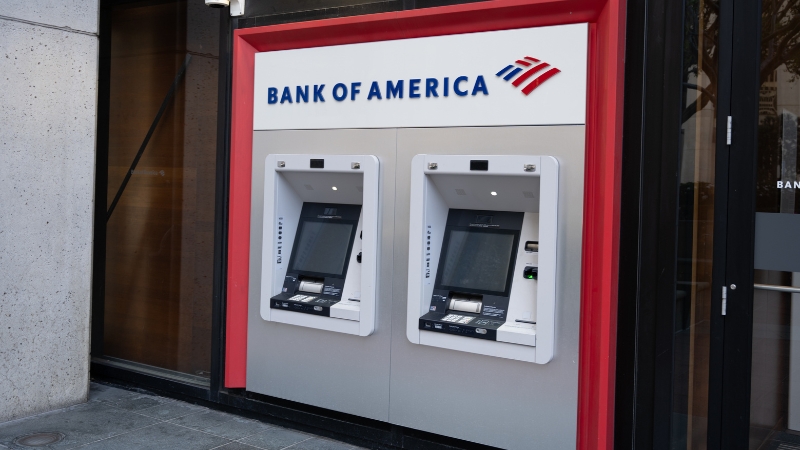
The review looked at the activities of nine banks: Bank of America, BMO Bank, Citibank, Capital One, JPMorgan Chase Bank, PNC Bank, TD Bank, Wells Fargo Bank, and U.S. Bank.
“To date, the OCC has observed that between 2020 and 2023, the banks maintained public and nonpublic policies restricting certain industry sectors’ access to banking services,” the report states.
“Many industry sectors were restricted based primarily on how it might appear to the public if the bank provided access to financial services to these sectors.”
Banks targeted certain sectors when they were subject to political and media attention, including the firearms industry, oil and gas, and political action committees.
According to the report, “At least two banks highlighted ‘polarizing’ or ‘polarized’ public opinion surrounding individual gun ownership rights and gun control as part of the basis for their firearms restrictions.”
With regard to political action committees and political parties, “several banks, or lines of business within certain banks, restricted lending and other financial services to individuals or entities for the benefit of a political candidate or parties in support of a campaign effort.”
WORLD EXCLUSIVE: “We Are Dealing With A New Kind Of Totalitarianism- A Liberal Totalitarianism!”