 Image Credit: J. David Ake / Contributor / Getty Images
Good riddance—but maybe not so fast.
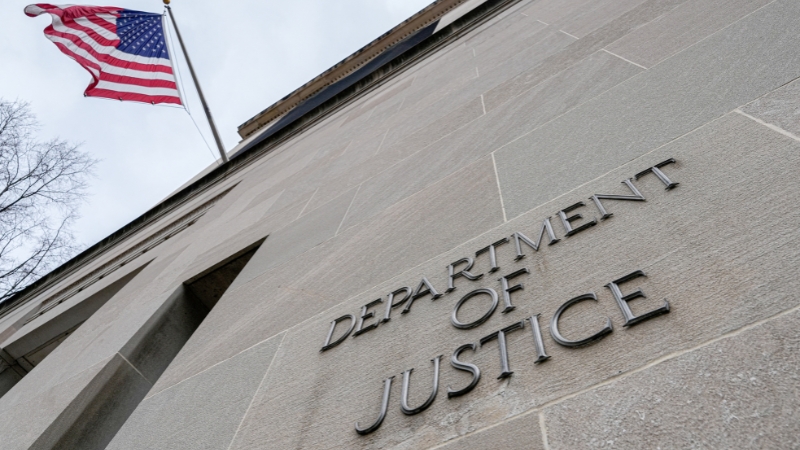
That’s what I said back in October, when the death of the Community Relations Service (CRS) was quietly announced, without fanfare, in a DoJ budget document.
Good riddance, because the CRS was perhaps the most viciously anti-white institution in modern America, a Kafka-esque entity whose chief purpose was to hide serious racial crime targeting the only demographic it was impossible—at least officially—to be racist against; but not so fast, because there were still plenty of questions about that wretched institution that needed to be answered.
Now, with America’s first explicitly pro-white government in seventy years, I reasoned, we have the means and the will to answer those questions, at long last. Give us a full post-mortem. Tell us how bad it really was.
Most of all, we needed to know exactly which cases the CRS had been involved in, and which crimes it had hidden or minimized.
Since its foundation in 1964, as part of the Civil Rights Act, the CRS was shrouded in mystery. Its existence was acknowledged, but that was pretty much it. Government officials didn’t talk about the CRS, and neither did the media. I’ve read the CRS was also immune to FOIA requests, but I’ve never had this confirmed.
Although the CRS generally didn’t advertise its services, it gave away just enough information for there to be no doubt about the nature of its evil.
Until I started regularly writing about the CRS, in 2023, its website listed a case study that detailed some of the tools at its disposal to “manage community tensions.”
In 2018, Donald Giusti was stoned and kicked to death by a gang of Somalis in a park in Maine. Tensions in the town of Lewiston had been high since a large influx of migrants and then, suddenly, things boiled over. In response to the killing, the local police chief called in the CRS.
The first thing the CRS did was invite members of Donald Giusti’s family to make public statements calling for calm and reconciliation in the town, and disavowing a racial motive.
The CRS also intervened to ensure the man who struck the fatal blows got off with a light sentence. He pleaded no contest to a lesser charge of criminal negligence—not murder—and was sent to prison for just nine months.
Nine months.
Once you knew what the CRS did and how, it was possible to see its fingerprints all over other similar cases.
I’ve suggested the CRS was involved in the cases of Jonathan Lewis, a 17-year-old white boy stomped to death by a gang of black teenagers, and Andy Probst, a retired police chief who was run over deliberately by two non-white teens on a joyride.
There was a strong whiff of suspicion when the father of Aidan Clark held a press conference and said he wished his son had been killed by an old white man instead of a Haitian—to own the racist MAGAs, of course. That was during the whole “Haitians eating dogs and cats” saga of the election campaign.
Maybe the CRS also coached the father of Austin Metcalf: He said some crazy things after his son was stabbed to death at a school track meet in Texas by Karmelo Anthony, a black teenager.
These are just four likely cases from the last three years. The CRS existed for 60. We’re probably talking about hundreds of cases. Hundreds of violent attacks and murders, their true nature hidden.
We’re still waiting for answers.
But right now the whos and the whens must take a backseat, because the CRS is being brought back from the dead.
After being stripped of all funding, a new bill could restore significant amounts of money to the CRS, and nobody is talking about it.
HR 6938 is an appropriations bill introduced on Tuesday by Rep. Tom Cole (R-OK). The bill aims to provide full funding for fiscal year 2026, and covers a wide range of priorities, including commerce, justice and science, energy and environmental concerns.
Buried deep in the text of the bill—isn’t that always the way?—is a clause that appropriates up to $20 million to the Community Relations Service “upon a determination by the Attorney General that emergent circumstances required additional funding for conflict resolution and violence prevention activities of the Community Relations Service.”
That’s just $4 million shy of the full 2025 budget for the CRS, which paid for 56 employees and two attorneys. The clause makes the appropriation contingent—“upon a determination…”—but we should be under no illusions: This is a full restoration of the Community Relations Service, as it was.
So who’s responsible for this?
It’s unlikely the clause comes from the hand of Tom Cole himself, a Republican who has a strong conservative record on racial issues. Cole is part-Chickasaw, but he’s never been vocal about racial issues beyond the Reservations. He’s never taken the knee or told us to say Breanna Taylor’s name like some cucked Republicans I could mention.
The bill is the product of bipartisan negotiations intended to prevent another government shutdown in January. My guess is the clause was introduced by Democrats who’ve also been working on the bill.
In truth, it doesn’t really matter who or why. We already know why the CRS was so important to the leftist project of subverting and destroying America. What matters is that the bill isn’t allowed to pass—or any bill for that matter—if it contains a clause reestablishing the CRS by hook or by crook.
The Trump administration has already done so much, at home and abroad, to fight anti-white racism and level the playing field. Some of the things it’s done—like reserving all refugee admissions for Afrikaners and European patriots fleeing persecution—are scarcely believable, and would have been unthinkable even a year ago.
If it takes a silver stake to prevent the CRS returning from the dead, so be it. The monster must be slain, once and for all—for good.