 Image Credit: Anna Barclay / Contributor / Getty Images
Last weekend, with very little fanfare, a bill entered the Wyoming state legislature that could have momentous consequences for freedom of speech in the US. What’s more, it could offer much-needed relief for the heavily pressed peoples of Europe, groaning under the weight of their own governments’ arrogance and contempt.
The Guaranteeing Rights Against Novel International Tyranny and Extortion (GRANITE) Act, House Bill 0070, if passed will be the first US law designed to create a private right of action against foreign censorship.
Representative Daniel Singh introduced the bill.
He said, “foreign governments have decided they can threaten American citizens and American companies for speech that is protected by our Constitution… Wyoming is drawing a line in the sand.”
The Act provides that any resident of Wyoming, business based there, or US citizen with a server there can sue foreign governments that attempt to censor them.
Each violation will cost the offending entity at least $1 million or 10% of its US revenue, whichever is higher.
The GRANITE Act also prohibits Wyoming courts and state agencies from recognizing or enforcing foreign censorship requests, including extradition requests or demands for data, if the request is linked to Constitutionally protected speech in the US. Any local participation in foreign attempts to investigate, penalize or prosecute individuals and businesses over lawful expression will be barred.
I spoke to Preston Byrne, legal head at Arkham, a cryptocurrency exchange and blockchain-analysis platform, about the Act. Byrne has represented a number of American clients, including the forum website 4Chan, in cases where European governments have tried to censor them. Ofcom, the UK media regulator, has demanded tens of thousands of pounds in fines, compounding daily, if 4Chan does not provide the information it has requested.
“The GRANITE Act is a tightly tailored response to a very new problem: foreign governments assuming that the transnational nature of the Internet entitles them to govern American speech and conduct conducted wholly and exclusively on American soil,” Byrne told me.
“The model law was developed as a direct response to the conduct of the UK’s Ofcom in its pursuit of my American clients, where Ofcom asserted that UK law governs the conduct of US citizens on US soil, and also that Ofcom was entitled to sovereign immunity with respect to its activities on US soil.”
Byrne continued by explaining how the law will make it harder to censor US citizens.
“GRANITE makes it clear that foreign censorship orders are not enforceable on US soil, bars executive branch cooperation with those orders and extradition in relation to those orders, and creates a private right of action allowing victims of foreign censorship that targets Wyoming to sue foreign censors in U.S. courts.”
We should be in no doubt: European censorship is not limited to cases like those championed by Preston Byrne. It’s taking place all the time, under the noses of Americans, and so far nothing has been done about it; although the Trump administration has made a number of threatening noises, including during the election campaign and at last year’s Munich Security Conference, when Vice President JD Vance made Europe’s assembled great and good collectively shit themselves by telling them “You, not the Russians or Chinese, are Europe’s worst enemy.”
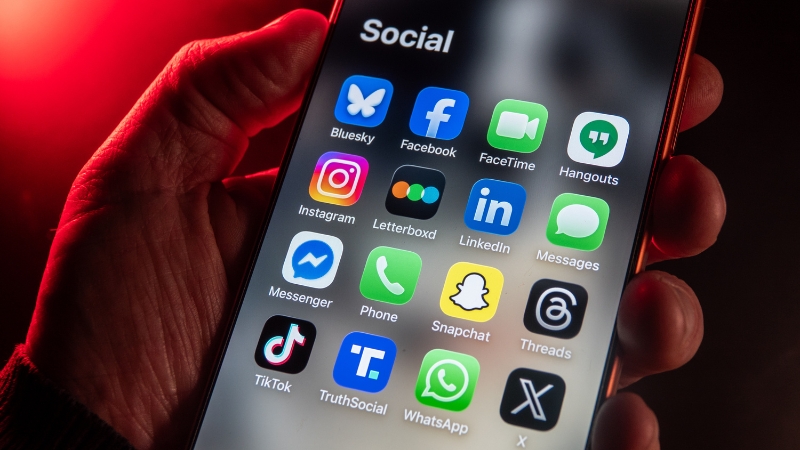
Back in July of last year, a few months after Munich, I wrote a long analysis for Infowars on the dangers posed by the EU’s Digital Services Act, which is being used to censor what Americans say on the world’s largest and most important social-media platforms, including X.
The Digital Services Act is a continuation of an earlier piece of legislation, from Germany, often referred to as “NetzDG.” If you’ve been posting on Twitter for a while like I have, and if you’ve been posting spicy things like I have, you’ll probably have encountered NetzDG firsthand, in the form of strange notices saying you were breaking German law. The notices threatened various sanctions, up to and including being banned from the platform, if offending Tweets were not swiftly removed.
Here’s some of what I said about the evolution from NetzDG to the Digital Services Act, and what it means for Americans using the internet right now.
NetzDG remained in force until 2022, when the Digital Services Act was passed. This new law had an EU-wide effect. Instead of the whole internet being subject to German law, now it’s subject to EU law—to the law of all 27 member states—and non-compliance is punishable by catastrophic fines of up to 6% of a company’s global turnover.
Member states can flag posts for censorship and so can the European Commission itself. National authorities and the Commission can name “trusted flaggers” whose reports are expedited and given extra weight.
But the DSA goes further. On top of requiring internet platforms to censor speech that’s illegal in the EU, they must also act against mis- and disinformation—information that is not illegal but simply decided by the authorities in Europe, for whatever reason, to be “harmful.”
We all know what this looks like, of course—the crusade against harmful mis- and disinformation—from the pandemic.
And for all intents and purposes, Americans might as well still be stuck in the dark days of the pandemic, under the Biden presidency, before Elon Musk took over Twitter, because this censorship regime is still in full swing. The only real difference is, it’s not as overt. But it’s still there, and in many ways it’s worse, because it’s even less clear what’s going on than it was before.
Yes, people aren’t getting banned in the same way as they were, but they are having their reach limited. They’re simply being made invisible. As Elon Musk himself put it, not long after he bought Twitter in 2022, “freedom of speech isn’t freedom of reach.” He said this as a direct reassurance for the censors in Europe.
Now, instead of outright banning people or putting them on a three-strikes-and-you’re-out warning, posts that contain “harmful” content are simply made to disappear by means of algorithmic tweaks. Nobody sees them, nobody is “hurt.” This is enough to satisfy the EU.
Safety labels are attached to posts that are flagged, but unlike the labels that appeared during the pandemic, these are only visible to internal moderators. That means we don’t even know what is being flagged or why.
The scale of the labelling and pre-moderation is staggering. X’s “transparency report” for April 2024—a piece of mandatory compliance enforced by the EU—shows the platform took action on 226,350 of 238,108 items reported to it by the EU.
That’s 95%—near total compliance.
But these reports only contain items reported by the EU. They don’t include items reported by individuals, organizations or government “trusted flaggers,” nor do they contain reference to material that’s automatically repressed by X’s own algorithm. In short, there’s probably much more censorship taking place beneath the waterline.
How much of this is taking place in America? Again, we don’t know precisely, but we can get a sense of the scale. The April 2024 report states that 90% of X’s 1,726 content moderators are primarily English speakers. So the vast majority of the censorship on X in compliance with EU law is in English, despite barely 1% of the EU population speaking English as their first language.
What’s clear, I think, is that if something is to be done about infringement of Americans’ First Amendment rights by foreign governments—a possibility that would have made the framers of the Constitution recoil in horror—the GRANITE Act can only be the beginning. And that’s exactly how the Act is conceived: as a beginning, not an end.
Here’s Preston Byrne again, outlining his hopes for further action and laws at the federal level: “We will need changes at the federal level to disapply sovereign immunity for foreign censorship, which is a creation of U.S. federal law, and eagerly await Congressional action on this front.”
If the federal government moves to block European censorship, Americans would of course be the main beneficiaries, but there would be benefits for others too. As I said in my piece “Freedom of Reach,” Europeans are “labouring under a near-universal tyranny” and need all the help they can get to escape the clutches of their own governments. There’s every reason to believe that JD Vance’s warning during the election—keep coming for Elon Musk and maybe we’ll leave NATO—and other minatory gestures have prevented European leaders from pressing their citizens as hard as they’d like to.
Real action from the Trump administration, beyond threatening words, could give Europeans much-needed breathing space and prevent their governments from snuffing out all hope of change.
In this case, America First at home could also be America First abroad: an assertion of the universal benefits of American values. Everyone would win—everyone except Europe’s crooked, complacent elite, that is. But who cares about them anyway?