 Image Credit: BING
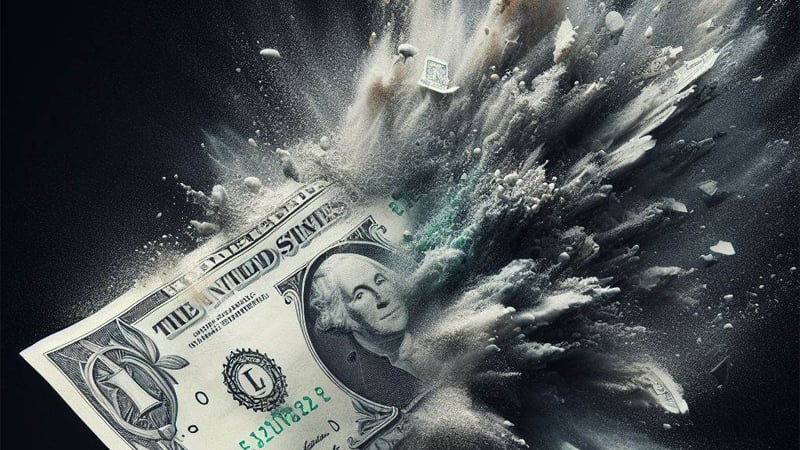
In a system dominated by Keynesian economics the word “deflation” is considered taboo; like saying Donald Trump’s name out loud in a crowded Seattle yoga studio. The screeching reaction you will get is rarely worth the effort of arguing the point. Every element of modern financial policy is designed to prevent a deflationary event. Every central bank policy is designed to artificially drag the economy out of deflation using whatever fiat stimulus is necessary.
Of course, deflation is not always a bad thing. It’s the harsh tasting medicine sometimes needed to correct the many problems caused by bad investments, corporate fraud, consumer debt addiction, government interference in markets, etc. We saw this during the crash of 2008, but the Federal Reserve refused to let the treatment run its course.
The US, like many countries, has become disconnected from the concept of financial consequences. But when America’s massive system dodges accountability, the cost to future generations can be immense.
So now we’re stuck with 17 years of persistent monetary intervention and the inevitable stagflationary crisis it created. The fact that Keynesians like Paul Krugman, Janet Yellen and Ben Bernanke downplayed or outright denied the existence of the inflationary threat shows, at the very least, that they know inflation is a bad thing for the general public (otherwise, why would they try to hide it?).
They denied reality so hard it made them look stupid when 2022 hit the US with a 9.1% CPI rate. The consequences of stimulus driven policies are now undeniable and the Keynesian “experts” have been proven useless, but this doesn’t mean anything is going to change for the better.
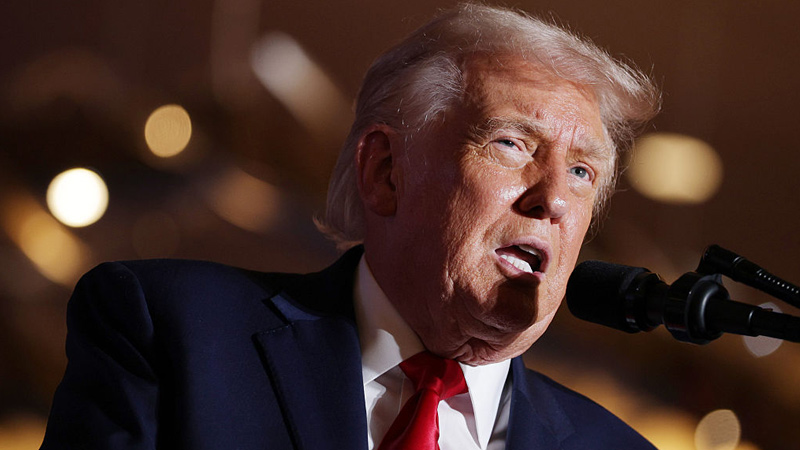
My ongoing question with the return of Donald Trump to the White House has been this: How are the banks going to pull the rug out from under this administration? Will it be a deflationary crisis, or an even bigger inflationary crisis?
As I noted last month in my article “Inflection Point: US Government Shutdown And Strange Economic Signals”, gold and silver prices seem to be on the verge of going parabolic (beyond the price explosion we’ve already seen this year), which indicates incoming inflationary pressures. Or, at the very least, a global expectation among investors and central banks of a crisis event which will precipitate further inflation.
I suspect this is partially due to the monolithic interest payments that the US government is required to make on existing debt ($250 billion every 3 months currently). Central banks and investors are snapping up gold and silver, perhaps with the expectation that US debt will become unstable, thus affecting dollar value or triggering a new round of QE.
Furthermore, despite Federal Reserve intervention in interest rates, consumer spending has not significantly slowed down and debt borrowing continues to climb to record highs. CPI growth has slowed dramatically from the Biden era, but prices have not dropped enough to give relief to average Americans. If the Fed’s goal in jacking up interest rates was to slow demand, they failed miserably.
As I’ve noted in the past, the central bank had to hike interest rates to over 20% in the early 1980s to finally end the decade long stagflation crisis – We didn’t come anywhere close to that post-pandemic. Meaning, the Fed put a band aid on an inflationary gunshot wound.
But is deflation just around the corner? There are some signs that this is happening. For example, job availability has dropped by 500,000 openings in the past year, and keep in mind around 30% of all advertised employment opportunities are actually “ghost jobs” that don’t actually exist.
There have been increases in job layoffs in 2025, but 27% of those are connected to DOGE cuts to government bureaucracy. White collar jobs have seen a increase in layoffs of around 19% for the year.
The US national debt increased by $2.2 trillion in 2025. Consumer credit debt is increasing by around $190 billion every quarter. Total household debt has hit $18.5 trillion. Eventually, the debt expansion is going to drag down consumption, but this doesn’t seem to be happening yet.
There hasn’t been a noticeable slowdown in retail spending, nor in credit borrowing. Prices remain significantly higher compared to before the pandemic despite softening of the CPI. The elements needed for deflation to pull prices down just don’t exist.
I continue to suspect that a deflationary event is coming, but I think this will only happen after another round of inflation hits the economy. If the Fed cuts rates to the point that CPI spikes sharply again (which won’t take long), then rising prices will ultimately hobble consumer spending. If they don’t, then the Fed will hike rates well beyond recent highs, just as they did in the 1980s.
It’s the Catch-22 trap that I have been talking about for years and it’s not going away. The choice is really up to the Fed – To increase interest rates far beyond what they did in the past three years, or stimulate. In other words, the roller coaster starts in 2026 as the central bank continues to cut. Watch for returning instability in the CPI in the summer and fall.
Trump’s tariffs, if they are still in effect, will likely be blamed despite the fact that tariffs have avoided the kind of cost crisis that many critics were predicting. How did this happen? Well, because the critics don’t take into account the massive mark-up from manufacturers overseas to retail prices on the shelf.
Prices on many goods are jacked up by 250% on average once they reach the US. Some apparel items see a markup of over 900% before they hit the shelf. The price of labor and materials in Asia is exceedingly low, and the charges on final products in America are exceedingly high. This is why most international corporations can eat the tariff taxes without much trouble to consumers.
Tariffs are estimated to have caused an increase in CPI of 0.7% since they began according to Harvard research data; a negligible amount compared to the disastrous predictions of many mainstream economists.
That said, inflation continues to loom and tariffs make for a useful scapegoat simply because most people don’t understand them. There has been no deflationary correction, not since 2008 and not since the pandemic stimulus. Which means high demand has not been quelled and savings are not increasing (the US personal savings rate declined to record lows in 2024-2025). Excess dollars are still increasing in circulation and FRED M2 continues to climb. The system never took its medicine.
This means that as the central bank returns to lower rates, borrowing will explode to even higher levels. Inflation will resurface, likely by the third quarter of 2026 if the Fed continues to cut interest rates into next year.
The Trump Administration is taking measures that could help mitigate prices. Mass deportations will certainly reduce domestic demand for goods and housing, which means more supply and falling prices. But this won’t happen at the kind of pace we need unless Trump finds a way to at least double the current annual deportations. The effects will be cumulative and will take years to affect markets.
Overall, I don’t see a way to escape more inflation in the near term without dramatic changes to economic conditions, or a historic move by the Federal Reserve to hike interest rates to levels not seen since the stagflation crisis 50 years ago.