 Image Credit: ROBYN BECK / Contributor / Getty Images
I don’t think an Executive Order providing immunity to producers of glyphosate was on anybody’s bingo card for a second Trump term. It certainly wasn’t on mine. But that’s what America got on Wednesday, or so it seems.
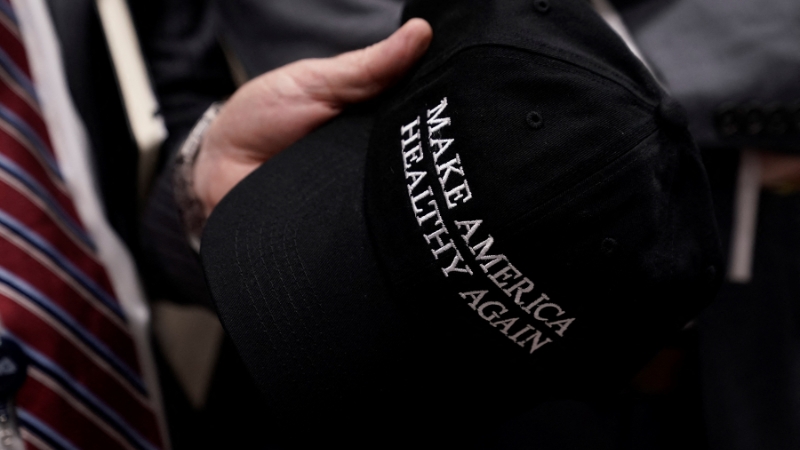
Could there be a bigger betrayal of the Make America Healthy Again (MAHA) movement, which played a crucial role in returning Donald Trump to power?
If it’s true—maybe not.
President Trump’s Order—“Promoting the National Defense by Ensuring an Adequate Supply of Elemental Phosphorus and Glyphosate-Based Herbicides”—declares those two things to be scarce materials critical to national security, and invokes the Defense Production Act of 1950 to increase domestic production.
Importantly, the Order “confers all immunity provided for in section 707 of the Act.”
Section 707 states that no person can be held liable for damages or penalty for acting in compliance with any rule, regulation or order issued under the Act.
So yeah, that really does look like immunity as you or I or a crunchy MAHA mom would understand it. Domestic producers of glyphosate can’t be held responsible for harms caused by their products, because their products are now deemed vital to national defense.
This is the holy grail for pesticide manufacturers, something they’ve lobbied for for years, as lawsuit upon class-action lawsuit has piled up against them: a licence to continue causing vast amounts of harm, and making vast amounts of money, with impunity.
There’s no way to spin this as good, at least not that I can think of.
I’ve written extensively about glyphosate. It’s a foul chemical. Here’s a primer if you want to get up to speed. Basically, glyphosate has been linked to every kind of chronic disease you can think of, from obesity and diabetes to gut dysfunction, neurological conditions and cancer.
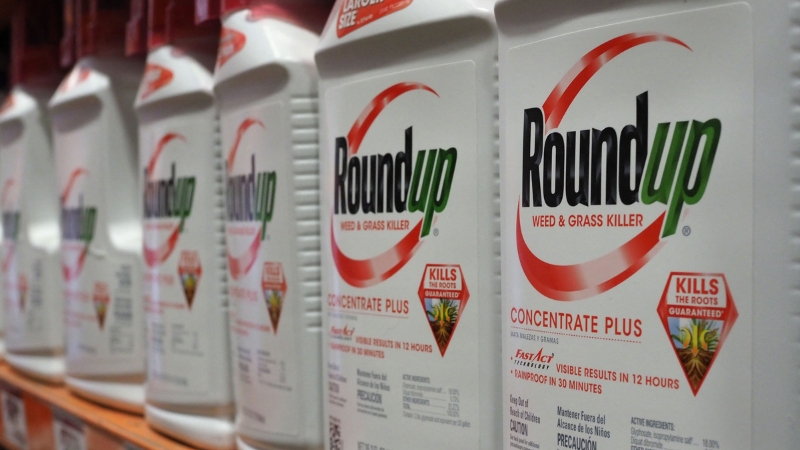
Bayer, the maker of Roundup (the most popular glyphosate-based herbicide), has already paid billions of dollars to people who claim to have developed non-Hodgkin’s lymphoma, a very nasty form of cancer, from exposure to its product. Close to 70,000 more claims still remain unresolved, and thousands more have been consolidated into a mega-lawsuit—a “multidistrict litigation” or MDL—in the US District Court for the Northern District of California.
Scarcely a day passes without new evidence of the harms glyphosate can cause. Recent scientific research has suggested plausible mechanisms by which the chemical could cause autism. Rates of autism in the US have exploded in recent decades, and so has exposure to glyphosate.
Since 1974, at least 1.6 billion kg of glyphosate have been used in the US alone, or roughly 20% of total global usage. Glyphosate is sprayed by the swimming pool on corn and soy in the Midwest—genetically modified versions of the crops are “Roundup Ready,” meaning you can use even more glyphosate on them (*gleefully rubs hands*)—but it’s also used across the country on lawns and parks and verges and in people’s back gardens.
When large-scale studies of glyphosate exposure are carried out, we discover that 80.2% of Americans over the age of six have detectable levels in their urine. Food, water and also the air are the main sources of exposure, especially if you live in an agricultural area.
A study of pregnant women from the Midwest showed 99% of them had it in their bodies. Glyphosate has been shown to cross the placental barrier during pregnancy, and is found in cord blood after birth.
Glyphosate is even found in men’s semen. A French study found it concentrated in semen at levels four times higher than in the blood.
So not only is glyphosate awful, it’s everywhere and it gets everywhere.
A man who knows this is Robert F. Kennedy Jr., Secretary of Health and Human Services and the man leading the crusade to “Make America Healthy Again.” Kennedy has campaigned for years to raise awareness of the harms of pesticide exposure, especially glyphosate, and he’s made eliminating pesticides from agriculture and the food supply one of the key missions of that crusade.
Today, Secretary Kennedy published a long Tweet defending President Trump’s Executive Order.
While much of it makes sense, parts of it are little better than special pleading, despite his Kennedy’s vow to “always tell the American public the truth.” I can imagine it was a painful Tweet for him to write—or at least to dictate to one of his aides (no doubt a cute blonde with a very hard body).
Kennedy began by saying he remains committed to reducing and ultimately eliminating the use of harmful pesticides in American agriculture.
“Pesticides and herbicides are toxic by design, engineered to kill living organisms,” the post begins.
So far so good.
“When we apply them across millions of acres and allow them into our food system, we put Americans at risk. Chemical manufacturers have paid tens of billions of dollars to settle cancer claims linked to their products, and many agricultural communities report elevated cancer rates and chronic disease.”
Again: good and true.
America must move away from its reliance on pesticides and herbicides, Kennedy continued, but the transition must be gradual and done “without destabilizing the food supply.”
This is where it gets tricky, and the special pleading starts.
Kennedy is right that any attempt to eliminate chemicals like glyphosate overnight would have a devastating effect on the food supply. Industrial farming, which produces the vast majority of America’s food, is geared towards the massive use of chemicals and simply wouldn’t function without them. Unless you want American farmers to go out of business and Americans to go without homegrown food, you’re going to have to find a way to make the switch as gently as possible.
Kennedy is also right that President Trump is not responsible for the perverse incentives that drive the current system, incentives that are laid out in detail in my 2022 book, The Eggs Benedict Option, and in Michael Pollan’s classic book, The Omnivore’s Dilemma.
“For decades, Washington designed modern agriculture. Policymakers wrote farm policy, directed research dollars, structured subsidies and crop insurance, and shaped commodity markets to reward monocultures and maximum yield. Those deliberate choices locked farmers into chemical dependence and prioritized short-term output over long-term soil vitality and human health.”
Of course, if President Trump is not responsible for decades of corn and soy subsidies or Big Ag kickbacks, he doesn’t have to continue feeding the system’s short-sighted priorities by giving immunity to pesticide manufacturers.
Right?
Thankfully, HHS and the Department of Agriculture under Brooke Rollins are hard at work on solutions to break this damaging cycle, Kennedy said.
One solution is regenerative agriculture—“farming systems that rebuild soil, increase biodiversity, improve water retention, and reduce reliance on synthetic chemicals”—and the other is “next-generation technologies” like the laser weed-and-bug-zapping tractor-trailers Kennedy talked about on the Theo Von show the other day. You pull them along and they zap weeds and bugs, so you don’t need to use herbicides and pesticides at all.
That’s all well and good, but RFK Jr. makes it sound as if these solutions are some way off. They’re not. Regenerative farming is ready to go, right now. Farmers like the wonderful Joel Salatin have proven their methods work, through years of hard work. Now they need to be applied on a nationwide scale.
The real question, if we’re to accept this Executive Order as a pragmatic measure, a kind of stopgap to protect the food supply, is—when?
When does the transition start?
When is the right time for America to start tapering off its addiction to glyphosate?
Kennedy is going to need to come up with an answer to that question, and fast.
MAHA people are angry. Very angry. The mainstream media is seizing on the Executive Order as evidence the Trump coalition is coming apart at the seams, just like it did when Trump and Elon fell out over the H-1B visa scheme.
Reuters suggests this could lose the midterms for Trump. I don’t think that’s an exaggeration either, but I hope I’m wrong. More than that, I hope Kennedy actually does something about glyphosate, before the opportunity passes.